Scottish and Northern Irish notes, and other currencies Thai booths treat oddly
Article updated: 2026-09-17
Best rate GBP · Bangkok: 44.50 — Superrich Thailand — Headquarter Rajdamri 1 · Sep 20, 08:58 → Details
Most currency advice for Thailand stops at “bring dollars, euros or pounds”. That is right as far as it goes, but it hides a real problem: a Thai counter does not classify money the way your home country does. It classifies money by how easily it can sell that money on to a Thai bank. A note that is legal tender at home can be, from a Bangkok counter’s point of view, an unfamiliar object it has no buyer for.
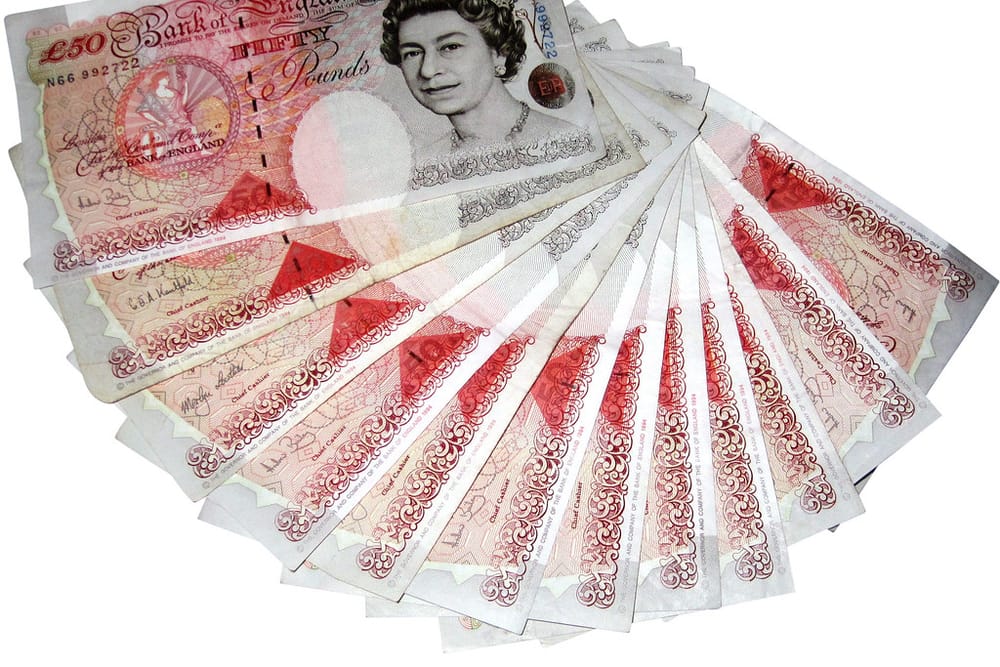
This article is mostly aimed at British and Irish readers, because sterling is where the confusion is worst, but the same logic explains several other currencies.
Scottish and Northern Irish sterling
Notes issued by the Bank of Scotland, the Royal Bank of Scotland, Clydesdale Bank, Bank of Ireland, Danske Bank, First Trust and Ulster Bank are pounds sterling. They are worth exactly what a Bank of England note is worth. Inside the UK they are accepted, if sometimes grudgingly, and they are not “foreign money”.
At a Thai counter they are a different proposition. The staff member is comparing the note in front of them against a reference sheet of Bank of England designs. Scottish and Northern Irish notes are not on that sheet, they look nothing like each other, and there are several issuing banks with several designs each. The realistic outcomes are:
- Refused. The most common result at smaller shops and at counters outside Bangkok.
- Accepted at a lower rate. Some larger city counters will take them, pricing in the extra work of sending them back.
- Accepted at the board rate. Possible at a large, busy Bangkok branch used to international traffic, but not something to plan around.
None of those is a scandal. It is the same reason a British corner shop hesitates over a Northern Irish fifty.
What to do: swap them at a UK bank or Post Office before you travel. Any UK bank will exchange them for Bank of England notes at face value, usually free, often without an account. Do it at home, where the swap costs nothing, rather than in Bangkok where it costs a percentage or a refusal. Gibraltar, Jersey, Guernsey and Isle of Man pounds are the same story, only more so — those are separate currencies pegged to sterling, and Thai counters will not take them at all.
The same advice covers the polymer Bank of England fifty. It is fine, it is current, and it is also the note most likely to get a long second look. Twenties are the easiest sterling denomination to change in Thailand.
Currencies quoted almost everywhere
These trade at tight spreads at any competitive Thai counter, and you should not think twice about bringing them: US dollars, euros, pounds sterling, Japanese yen, Swiss francs, Singapore dollars, Hong Kong dollars, Australian dollars, Canadian dollars, Chinese yuan, Korean won, Malaysian ringgit, Taiwan dollars. Comparative spreads are in which currency to bring.
Currencies quoted, but thinly
A currency can appear on a board and still be a bad idea to carry in bulk. The tell is a wide gap between the buying and selling columns — that gap is the shop telling you it does not expect to move this money quickly.
Indian rupees. Quoted at major Bangkok counters. The complication is at the other end: the Reserve Bank of India restricts how much rupee cash a traveller may take out of India, and the limit changes. Indian readers should check the current RBI rule before packing cash, and should generally plan around a card or a forex card rather than rupee notes.
Vietnamese dong, Philippine pesos, Indonesian rupiah, Lao kip, Myanmar kyat. Regional currencies with genuinely poor spreads in Thailand. Kip and kyat are effectively border-town currencies — traded at Nong Khai, Mukdahan, Mae Sot and Mae Sai and almost nowhere else, as described in the border town guide.
Scandinavian currencies. Danish, Norwegian and Swedish kroner are traded, and are easiest to change where Scandinavian visitors actually go — Hua Hin and parts of Pattaya are noticeably better for these than a random Bangkok side street. The Hua Hin guide covers that.
Gulf currencies. Saudi riyals, UAE dirhams, Qatari riyals, Omani rials, Kuwaiti dinars, Bahraini dinars and Jordanian dinars are handled by the major Bangkok chains, which serve a steady Gulf clientele. Away from Bangkok, coverage thins fast.
Russian roubles. Quoted in Bangkok, Pattaya and Phuket where the traffic is. The spread is wide and it moves.
Currencies that are effectively untradeable
Some money simply cannot be sold on from Thailand, so no counter will buy it at any price worth taking:
- Coins, in every currency. Nobody takes coins. Spend them or leave them at home.
- Currencies with export restrictions or no convertible market, which includes several African and Central Asian currencies.
- Old series withdrawn from circulation. If your home central bank has replaced a note design, the withdrawn note is a home-bank problem, not a Bangkok one.
- Notes issued by a territory rather than a state, as above with the Channel Islands.
The other reason this matters: coming home
Everything above also runs in reverse. When you are changing leftover baht back, the shop is selling you foreign cash, and it can only sell what it holds. Dollars, euros, yen and pounds are usually available. A less common currency may not be in the drawer that day, or may only be available in awkward denominations. If you need a specific currency for a connecting stop, ask a large branch a day ahead rather than assuming. What to do with leftover baht goes through the options.
Who can ignore all of this
- Anyone bringing US dollars or euros only. There is no oddity to navigate. Bring large, clean notes and read the board.
- Anyone travelling without cash. If you are on a card-and-ATM plan, the currency your notes are printed in is irrelevant. Your costs are the flat 220-baht ATM fee, your bank’s foreign transaction fee, and refusing dynamic currency conversion every time it is offered.
- Anyone changing a trivial amount. If you are converting fifty pounds for a weekend, the difference between a good counter and a poor one is small enough not to reorganise your trip around.
- British readers who already hold Bank of England notes. You have nothing to fix. This article is for the ones who withdrew cash in Edinburgh or Belfast and did not think about it.
The general rule holds: the fewer steps between your note and a Thai bank’s vault, the better your rate. Anything that adds a step — an unfamiliar issuer, a thin market, a small denomination, a scuffed note — you pay for. Check what counters near you are quoting for your currency on the Bangkok page before you walk anywhere.