Dynamic currency conversion: always decline "pay in your own currency"
Article updated: 2026-09-16
Best rate USD: 33.24 — Superrich Thailand — Headquarter Rajdamri 1 · Sep 20, 08:58 → Details
There is one screen in Thailand that costs travellers more money than anything else they will encounter, and it is designed to look like a favour. You put your card into an ATM, or hand it to a waiter, and the machine asks whether you would like to be charged in Thai baht or in your own currency — pounds, dollars, euros, yen — with a helpfully converted figure already displayed.
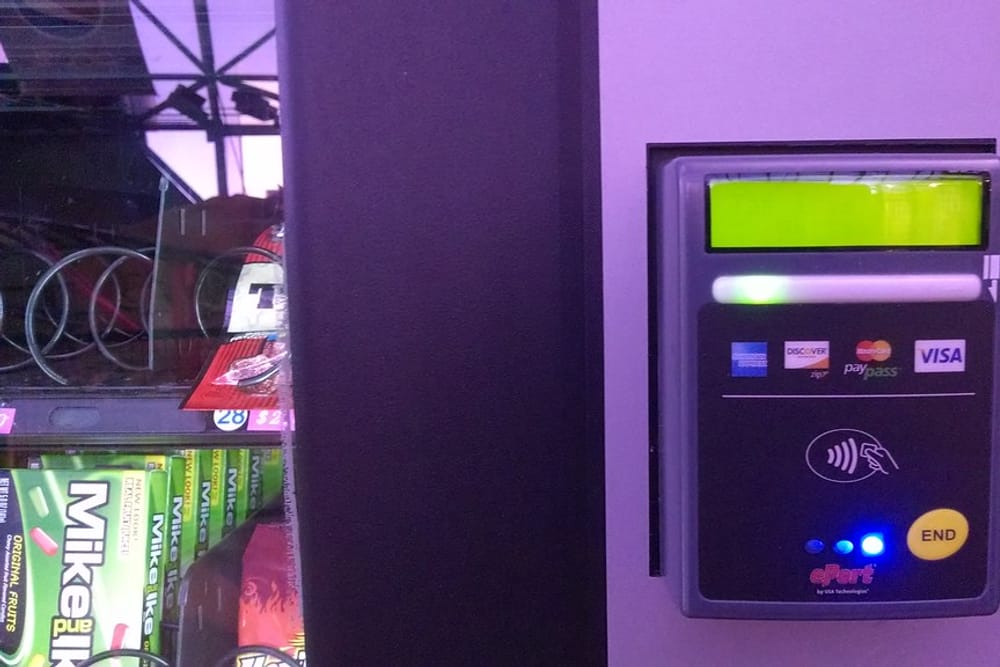
Choose your own currency and you will pay several per cent more than you needed to. Every time. This is dynamic currency conversion, usually shortened to DCC, and the correct answer is always Thai baht.
What DCC actually does
Normally, a foreign card transaction in Thailand works like this: the amount is charged in baht, sent through the card network, and converted by Visa or Mastercard at their wholesale rate. That rate is close to the interbank rate and is published daily. Your own bank may then add a foreign transaction fee on top, typically somewhere between nothing and three per cent depending on your card.
With DCC, the conversion happens at the other end instead. The ATM operator or the shop’s payment processor converts the amount into your home currency at a rate they choose, and sends the transaction through the network already denominated in that currency. Your card network never gets to apply its own rate, because there is nothing left to convert.
The rate they choose contains a margin. That margin is the entire business model.
How much it costs
The typical DCC markup sits somewhere between 3% and 7% above the wholesale rate, depending on the operator. Some ATM operators sit at the high end of that range. Some restaurant terminals are more modest. You will not be told which, because the screen never shows the rate as a markup — it shows it as an exchange rate, and most people have no idea what the correct exchange rate is at that moment.
On a 40,000-baht hotel bill, a 6% markup is 2,400 baht. On a 20,000-baht ATM withdrawal it is 1,200 baht, which is on top of the flat 220-baht fee Thai ATMs already charge foreign cards. A traveller who accepts DCC on every transaction for a two-week trip can easily lose more than the cost of a domestic flight.
And critically: accepting DCC does not remove your own bank’s foreign transaction fee. Some terminals imply that it does. It does not. Many banks charge that fee based on the merchant’s country, not the currency of the transaction, so you can end up paying both.
The exact wording to watch for
DCC screens vary by operator but the offer always looks the same in structure: two options, one in baht and one in your currency, with the home-currency option made more prominent.
Phrases that signal DCC:
- “Would you like to pay in GBP instead of THB?”
- “With conversion / Without conversion”
- “Accept conversion” / “Decline conversion”
- “Charge my card in USD”
- “Guaranteed rate” or “rate guaranteed by the terminal”
- “Your currency: EUR 412.80 — Continue?”
- “Pay in local currency” (this is the one you want — local means baht)
Anything that shows you a figure in your home currency at the point of payment is DCC. A genuine baht transaction has no reason to display your currency at all, because nobody at that terminal knows what rate your bank will use.
The “guaranteed rate” wording is the most misleading of the set. The rate is indeed guaranteed — guaranteed to include their margin.
What to press
At an ATM: after you choose an amount, a screen appears offering conversion. Choose the option that means baht: “Continue without conversion”, “Decline”, “THB”, or “Pay in local currency”. The machine will sometimes ask twice, and sometimes phrase the second question the other way around, so read both screens rather than pressing the same position twice. Some machines display a small-print warning saying you may be charged a currency conversion fee by your own bank if you decline — this is true, and it is still far cheaper than accepting.
At a card terminal in a shop or restaurant: the choice appears on the handheld device before you enter your PIN. Press the baht option yourself if the device is in your hands. If the staff member is holding it, say “baht, please” before you hand the card over. It is a routine request and staff in tourist areas hear it constantly.
Online, on a Thai website: the same offer sometimes appears at checkout as a currency selector. Choose THB.
If it has already happened
Sometimes the terminal is set to convert automatically and you are never asked, or a member of staff presses the wrong option. You will see it on the receipt: the amount will appear in your home currency, often with the applied exchange rate printed underneath.
If you notice at the counter, ask for the transaction to be voided and re-run in baht. In a hotel or restaurant this is usually straightforward. At an ATM it is not possible — the withdrawal is done.
Card network rules require that DCC be offered as a genuine choice rather than applied without consent, so if you were not asked at all, your card issuer may be willing to look at it. In practice, for a small amount, the effort is rarely worth it. The lesson is cheaper than the dispute.
How to avoid the question entirely
- Carry a card with low or no foreign transaction fees and let the card network do the conversion. Multi-currency accounts such as WiseAd and Revolut are popular with long-stay visitors for exactly this reason, though they do not exempt you from the DCC screen — you still have to decline it.
- Use cash for anything mid-sized. Changing notes at a competitive counter is usually better value than a card transaction once fees are counted, and the rate is displayed on a board in advance rather than hidden in a conversion. Compare what the shops near you are quoting before you default to plastic.
- Withdraw large amounts rarely rather than small amounts often, since the Thai ATM fee is flat.
- Check your statement after the trip. Transactions that went through as DCC show your home currency as the original transaction currency. If you see a pattern, you now know which card or which merchant to avoid next time.
The one-sentence version
If a machine in Thailand offers to show you the price in your own currency, it is asking permission to set the exchange rate itself. Say no, pay in baht, and let your card network do the maths.