Airport to city centre in Bangkok, Phuket, Chiang Mai and Pattaya
Article updated: 2026-09-17
Best rate USD · Bangkok: 33.24 — Superrich Thailand — Headquarter Rajdamri 1 · Sep 20, 08:58 → Details
The gap between what a ride from the airport should cost and what a tired visitor pays is one of the larger avoidable expenses of a Thai holiday. It is also entirely a matter of knowing, before you walk out of the terminal, which of the available options exists where you are landing — because the four main entry points are not remotely alike.
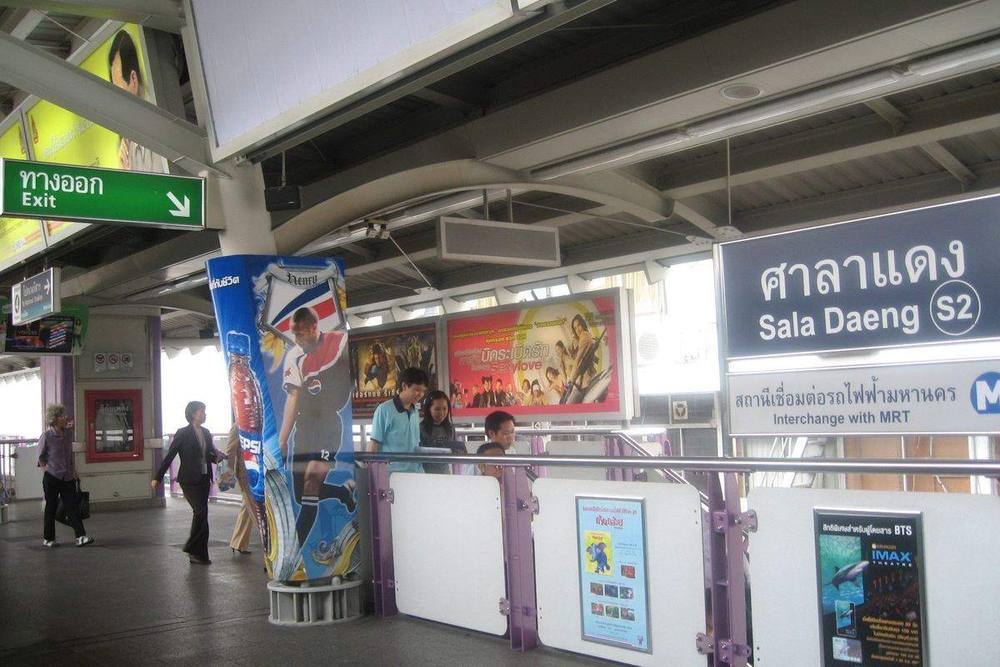
Bangkok has trains and a functioning metered taxi system. Phuket has neither and a long drive. Chiang Mai is close enough to town that almost anything works. Pattaya’s airport is not in Pattaya at all.
Bangkok Suvarnabhumi
The best-served airport in the country.
- Airport Rail Link to Phaya Thai, under 50 baht, about half an hour, then change to the BTS. This is the cheapest way in by a wide margin and the right choice in daylight with cabin bags to a hotel near a station. Last train is around midnight.
- Public taxi from the stand on level 1. Meter, plus the 50-baht airport surcharge, plus expressway tolls paid in cash on the way. Central Bangkok typically comes to 350–500 baht all in.
- A pre-booked transfer, fixed price, driver waiting with your name. Costs more; justified late at night, with three or more people, with real luggage, with small children, or going somewhere a driver will not find.
One habit covers most of the risk here: use the official taxi queue, insist on the meter, and ignore anyone who approaches you inside the building. A flat 1,000-baht offer at the door is the standard opening.
While you are there, the counters at level B by the Airport Rail Link platforms price far better than the arrival hall. Details on the Suvarnabhumi page and in airport versus city rates.
Bangkok Don Mueang
North of the city, and the low-cost hub.
- A1 and A2 buses to Mo Chit, about 30 baht, paid on board. Frequent and simple.
- SRT Red Line commuter train to Krung Thep Aphiwat central station, connecting to the MRT. Check the current fare.
- Public taxi from the stand outside level 1, same 50-baht surcharge and the same meter rule.
Don Mueang is closer to the northern half of Bangkok, so a run to Ari or Chatuchak is cheaper than the same trip from Suvarnabhumi, while Sukhumvit is about the same. Traffic decides more than distance. There is no cheap exchange floor here, so change the minimum and do the rest in the city — see the Don Mueang page and the two-airport comparison.
Phuket
The hardest of the four, and the one where visitors most often overpay.
The airport is at the far north of the island. Patong, Karon and Kata are roughly an hour’s drive south in normal traffic. Phuket Town is closer but is not where most visitors are staying. There is no train.
The options are an airport bus and minibus service down the west coast, shared minivans, metered taxis whose availability at the kerb varies, and pre-booked private cars. Prices for all of these are higher than the equivalent distance in Bangkok and they change with the season, so check the current price rather than trusting a figure from a forum post.
Two things are worth knowing. First, the transport cost is large enough relative to a holiday budget that a booked transferAd for a family is often close to what the alternatives cost once you count a second vehicle. Second, Phuket’s high transport costs are one reason the exchange spread on the island is wider than Bangkok’s — walking between counters is not free here, which the Phuket guide goes into. Terminal counters are on the Phuket airport page.
Chiang Mai
The easiest of the four, because the airport is about fifteen minutes from the old city.
Metered taxis, airport taxis on a fixed-fare ticket system, ride-hailing apps and songthaews all work. Because the distance is short, the absolute amounts are small, and the difference between the cheapest and most expensive option is not worth much anxiety. Check the current fixed fare at the counter inside the terminal and compare it to what an app quotes.
This is the airport where pre-booking a transfer is least necessary. It is also the one where arriving without baht matters least, since the ride is cheap and short. The Chiang Mai guide covers the city’s counters; the Chiang Mai airport page has what is published in the terminal.
Pattaya
The thing to understand is that most visitors to Pattaya do not fly to Pattaya.
From Suvarnabhumi it is roughly two hours by road. Buses run from the airport’s public transport centre to Pattaya at a modest fixed fare. Shared minivans run the same route. A private car or pre-booked transfer costs considerably more but goes door to door. This is the single most common route, and the airport-kerb negotiation for a long-distance run is where visitors lose the most on day one — the price is agreed while you are exhausted and unfamiliar with the distance.
From U-Tapao (UTP), the airport actually serving the region, it is a much shorter drive south of the city. Fewer flights land here. Terminal information is on the U-Tapao page.
If your destination is Pattaya, this is the clearest case in the country for a transfer booked before you flyAd: the journey is long, the price varies widely, and there is no meter to fall back on. The Pattaya guide covers money once you are there.
The rules that apply at all four
- Never accept a ride from someone who approaches you inside the terminal. Walk to the official stand or counter.
- Meter where a meter exists; a price agreed before departure where it does not. The failure mode is a long ride with no agreed price.
- Have small notes. A driver taking a 400-baht fare does not want a 1,000-baht note at midnight.
- Have data before you land — an eSIM installed at homeAd — so you can show an address in Thai and check a map mid-journey. Options in eSIM versus the airport SIM counter versus roaming.
- Change a small amount in the terminal and the rest in the city. Enough for the ride, a meal and water.
Who does not need to decide any of this
- Anyone whose hotel includes a transfer. Resorts in Phuket, Samui and Pattaya frequently do. Check your booking confirmation before paying for anything.
- Anyone landing at Chiang Mai. The ride is short, cheap and hard to get wrong. Take whatever is at the kerb.
- Anyone travelling alone with a cabin bag in daylight to a hotel near a Bangkok station. The Airport Rail Link at under 50 baht is the whole answer and nothing else needs arranging.
- Anyone already holding baht and used to the city. You know the queue and the meter. Nothing here is new.
The pre-booked transfer is a real product with a real use, and it is worth its premium in specific circumstances: a long-distance run such as Suvarnabhumi to Pattaya or Hua Hin, an arrival after about 22:00, a group of three or more with luggage, small children, or a hotel down a soi with no name a driver will recognise. Outside those circumstances, the public options at these four airports are good and cheap, and paying to avoid them buys nothing.