eSIM, the airport SIM counter, or roaming: which one to use in Thailand
Article updated: 2026-09-17
Best rate USD · Bangkok: 33.24 — Superrich Thailand — Headquarter Rajdamri 1 · Sep 20, 08:58 → Details
A working phone is the piece of infrastructure the rest of your arrival day sits on. Without data you cannot call a ride, show a driver an address in Thai, check what a counter is quoting, find your hotel down an unlit soi, or tell anyone you landed. With data, every other decision gets easier.
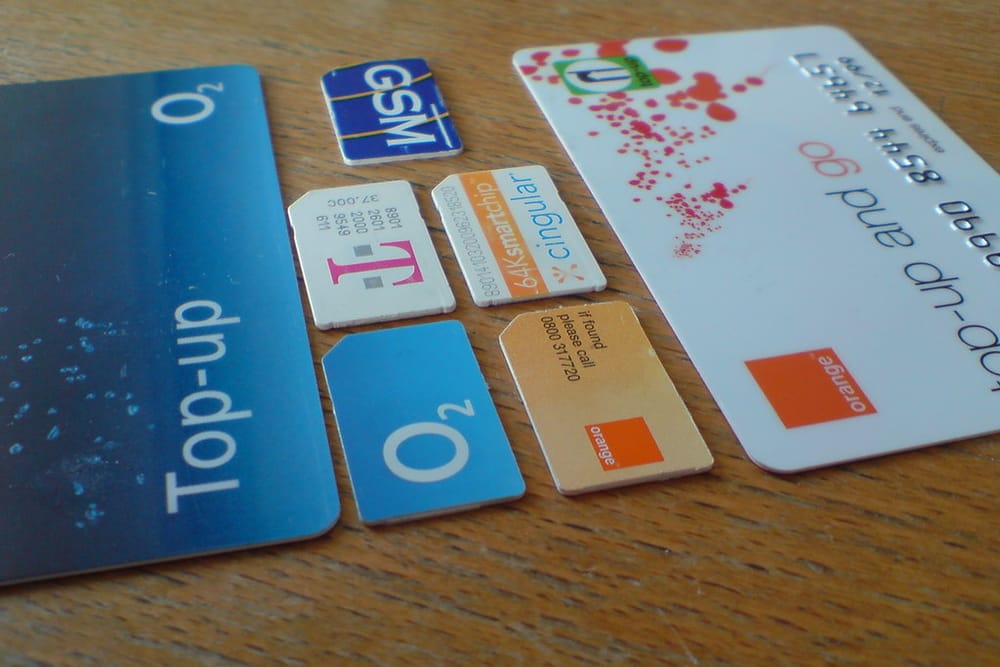
There are three ways to get it, they suit genuinely different trips, and the marketing around all three is unhelpful. Here is the comparison in the terms that matter.
The three options
An eSIM bought before you flyAd. A digital SIM profile you install at home over wifi and switch on after landing. Data only in almost all cases. Your home number stays active on your physical SIM alongside it, so bank codes and airline messages still arrive.
A tourist SIM from an operator counter in the arrival hall. A physical card, a Thai phone number, and a package sold in seven, ten, fifteen or thirty-day blocks. Sold by the three Thai networks at desks past customs at both Bangkok airports and at the major regional ones.
Roaming on your home plan. Change nothing, land, pay your own operator’s international rates or day pass.
What each actually costs
Prices for all three move constantly, and quoting a figure that will be stale next month is worse than useless. So here is the shape rather than the number, with the instruction to check the current price at the time you book.
eSIM. Priced by data allowance and number of days. A short holiday planAd with enough data for maps, messaging and a normal amount of browsing is typically the cheapest of the three by a clear margin, and the price is known before you leave home.
Airport SIM. Roughly comparable to an eSIM, sometimes a little more, sometimes a little less depending on the promotion running. The package usually bundles some calling minutes. Buying the same operator’s package at a shop in town rather than at the airport is usually cheaper again, if you can survive a day without.
Roaming. This is where the country you are from decides the answer, and it decides it very differently.
- UK, EU and EEA plans. Roaming bundles usually cover Europe. Thailand is outside them. Expect a daily charge or standard international rates unless your plan explicitly names Thailand.
- US plans. Several large US carriers include international data in Thailand at a throttled speed on mid-tier and premium plans, or sell a day pass. If you are on one of those plans, roaming may genuinely be the least effort, and it is worth checking your plan’s terms before assuming otherwise.
- Australian and New Zealand plans. Day-pass roaming is common and Thailand is usually a covered destination. The day rate adds up over two weeks but is convenient for a short stay.
- Canadian plans. Day passes are common and Thailand is often covered, at a daily rate that makes a two-week trip expensive.
The general rule: for a stay of more than three or four days, roaming is the most expensive of the three almost everywhere. For a two-night stopover, it is often the cheapest once you count your own time.
The cost nobody prices: the queue
The airport SIM counter has a real cost that does not appear on the price list. At peak arrival times the queue at the operator desks runs twenty to forty minutes. You will be in it after a long flight, holding your passport, while your suitcase waits. Registration is required by law and takes a few minutes per customer at the desk.
An eSIM eliminates that entirely. You walk off the aircraft connected, past the queue, to the exchange counter or the taxi stand. On a late arrival, when what is open at 02:00 becomes the question, that difference is larger still.
When an eSIM is the right call
For most visitors, most of the time. Specifically:
- You want to be connected the moment the aircraft lands.
- You are staying between a few days and a month.
- You want your home number to keep working for bank verification codes and airline messages.
- You are travelling to more than one country and would rather not swap physical cards.
- You do not want to hand your passport across a counter at 03:00.
Buy by data allowance and number of days rather than the headline price, install it at home on wifi, and leave it switched off until you land. Installing an eSIM needs an internet connection you will not have at the gate in Bangkok.
When an eSIM is the wrong call
Three cases, and they are worth being plain about.
Your phone does not support eSIM. Most handsets sold in the last several years do. Some older phones and some region-locked models do not, and there are regional variants of popular phones sold without eSIM support. Check the setting at home, not at the airport.
You need a Thai phone number. An eSIM usually gives you data only. A local number is needed for some Thai banking apps, some delivery and ride services when they verify by SMS, shop loyalty sign-ups, and giving a contact number to a hotel or a tour operator who will call rather than message. If that is your trip, buy a physical tourist SIM. The airport counter is the convenient place; a shop in town is cheaper.
You are staying for months. A local monthly package bought in a phone shop in Thailand will beat any short-stay travel plan on cost. Buy a cheap tourist SIM at the airport to cover the first week, then walk into an operator shop in town with your passport and buy the real thing.
Practical notes
- Thai law requires SIM registration against a passport. Any counter that does not ask for your passport is not doing it properly.
- Coverage in Bangkok, Chiang Mai, Phuket, Pattaya and along the main tourist routes is good on all three networks. It thins on remote islands and in mountain areas of the north; if you are heading to Koh Tao or deep into Mae Hong Son, do not assume full-speed data everywhere.
- Hotel wifi in Thailand is generally decent and widely available, which affects how much data you actually need.
- Keep your physical SIM in the phone with data roaming switched off and calls on. That way you receive bank codes without accidentally burning through roaming charges.
Who does not need to buy anything
- Anyone on a US, Australian, Canadian or New Zealand plan that already includes Thailand at a speed they can live with. Check the plan, then do nothing. Throttled data is slow but it loads a map and a messaging app.
- Anyone on a two-night stopover. A day pass or hotel wifi is sufficient and buying a fifteen-day package for two nights is waste.
- Anyone travelling with someone who already has a plan. One connected phone with a hotspot covers a couple or a family. The second and third people do not need their own.
- Anyone on an organised tour with transfers arranged. If a guide is meeting you and every movement is booked, your phone is for photographs.
- Anyone staying in one resort for a week. Wifi at the hotel and the pool, and no data in between, is a perfectly reasonable way to have a holiday.
The rest of the arrival-day sequence — how much to change, which counter, and what the ride into town should cost — is in your first two hours in Thailand.