Banknotes a Thai exchange booth will refuse, and the ones it discounts
Article updated: 2026-09-17
Best rate USD · Bangkok: 33.24 — Superrich Thailand — Headquarter Rajdamri 1 · Sep 20, 08:58 → Details
A Thai exchange counter is not buying a number, it is buying a physical object that has to be shipped, sorted and sold on to a bank. If the object is damaged, the bank downgrades it or refuses it, and the counter has to absorb that. So the counter refuses it first.
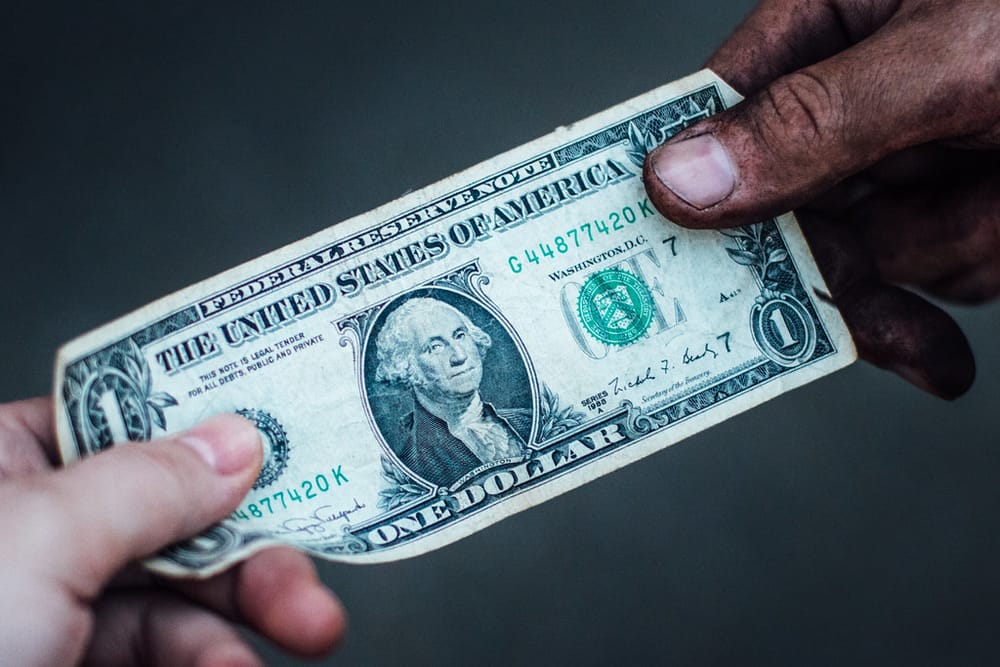
This catches visitors out because in most home countries a scruffy note still spends. You hand over a soft, folded twenty at a supermarket and nobody looks twice. In Thailand the same note can be handed straight back to you at the window, or accepted at a visibly lower rate than the one printed on the board.
What gets refused outright
These are the categories where a refusal is likely rather than possible.
Tears, splits and missing corners. A clean tear through the body of the note, or a missing piece, usually ends the conversation. Small edge nicks are often tolerated; anything that reaches the printed design is not.
Tape and repairs. A taped note is treated as a damaged note that someone tried to hide. Do not repair a torn note before you travel — you make it worse.
Writing and stamps. Ink of any kind. Bank teller marks, a phone number someone scribbled, a child’s pen, a shop’s counting stamp. This one surprises people the most, because it does not affect whether the note is genuine.
Stains, water damage, mould. Notes that have been through a wash, or stored somewhere damp, come out limp and discoloured. They are rejected on sight.
Ultraviolet marks. Some counters run notes under a UV lamp. Notes that have been washed, bleached or chemically cleaned fluoresce oddly and get returned without much explanation.
US dollars printed before 2006. This is a Southeast Asia-wide convention rather than a Thai rule, and it is worth understanding because it affects American and Canadian travellers most. Older US designs are harder for local staff and machines to authenticate, and counterfeits of the older series circulated widely in the region. Many Thai counters simply will not take them; those that do pay a lower rate. Check the small printed series year on the face of each note before you pack it. If you have older notes, change them at your own bank at home before you fly — your bank will take them at face value.
What gets accepted, but at a worse rate
A note does not have to be refused to cost you money. Two things quietly move you down the board.
Small denominations. A US$100 note, a ¥10,000 note, a €100 note earn the top line. Fives, singles, ¥1,000 notes and €10 notes are quoted separately and lower — routinely 1–3% behind. The counter has the same handling cost per note regardless of what is printed on it, so it pays less per unit of value. The mechanics of that are in how to read a rate board.
Heavy wear without damage. Deep folds, softness, grubbiness. Some counters take these at the standard rate, some drop you a tier, some send you to a different window. It varies by shop and by how busy they are.
Currencies where condition matters more
Condition tolerance is not uniform.
- US dollars get the strictest treatment, because of the pre-2006 issue and because dollars are the most counterfeited currency in the region.
- Euros, pounds, Swiss francs, yen, Singapore dollars are checked but judged less harshly. Modern polymer and hybrid notes survive handling better.
- Australian, New Zealand and Canadian dollars are polymer and almost never fail on condition. They fail on denomination tiers instead.
- Minor and regional currencies get the least tolerance, because the counter has fewer buyers for them and less room to absorb a downgrade.
What to do before you fly
This takes ten minutes and is worth doing at home, where you have options.
- Lay your foreign cash out and look at every note under a lamp, front and back.
- Set aside anything torn, taped, written on, stained or soft. Spend those at home, or swap them at your own bank.
- For US dollars, check the series year. Anything from 2006 or later is safe; older notes should go back to your bank.
- Keep the rest flat. An envelope or a passport wallet, not a trouser pocket or a rolled bundle.
- Bring the largest denominations your bank will give you.
At the counter
Hand the notes over flat and face up, in one stack, largest first. Counters count by hand and by machine, and a tidy stack moves faster.
If a note is pulled out and handed back, that is a normal outcome and not an accusation. Take it back and try a different shop — tolerance genuinely varies, and a note refused at one window is sometimes taken at another a hundred metres away. What you should not do is argue at the window. The staff member is not making a judgement about you; they are applying what their own bank will accept from them.
If a note is pulled out and kept, that is different, and it means the shop believes it is counterfeit. That is a separate procedure, covered in counterfeit notes and what happens if yours is refused.
Count what you receive before you leave the window, every time. Thai baht notes come back to you in a fan; the count is done in front of you for a reason.
Who does not need to worry about any of this
Skip the sorting exercise entirely if:
- You are not bringing cash. If your plan is a card for hotels and restaurants and an ATM withdrawal for the rest, none of this applies. The costs that do apply to you are the flat 220-baht ATM fee and your own bank’s foreign transaction charge.
- Your cash came straight from a bank or an ATM at home, this month. Bank-issued notes are clean, current-series and in order. Look at them once and move on.
- You are bringing Australian, New Zealand or Canadian polymer notes. Condition is essentially a non-issue. Just bring the big ones.
- You are changing a small amount. If you are converting the equivalent of one or two hundred dollars for a short trip, the difference between the top tier and a lower tier is a few tens of baht. It is not worth a morning of sorting.
The people this genuinely matters to are the ones carrying a large amount of US dollars in mixed, older notes — because that is where a refusal at the window is both most likely and most expensive to fix once you are already in Thailand.
Before you pick a counter, look at what the shops near you are quoting on the Bangkok page or in the shop directory. The board in front of you at the moment of the transaction is still the only binding rate.