Money scams around tourist areas, and the tells
Article updated: 2026-09-17
Best rate USD · Bangkok: 33.24 — Superrich Thailand — Headquarter Rajdamri 1 · Sep 20, 08:58 → Details
Thailand is a safe country for visitors and violent crime against tourists is rare. What is not rare is a small set of well-practised money routines that operate in the same few streets year after year. They work because they are polite, unhurried and plausible, and because the visitor is tired, new and trying not to be rude.
Knowing the shape of each one is enough. You do not need to be suspicious of everybody; you need to recognise about six patterns.
Exchange counter routines
Most Thai money changers are straightforward businesses competing openly on rate. The problems cluster around the counters positioned where tourists arrive with no comparison point.
The board that is not the rate you get. A large attractive number is displayed, and at the counter it turns out to apply only above a large amount, or only to a note denomination you are not carrying, or a commission appears at the end. The tell: small print, a second board, or a hesitation when you ask “so how many baht do I get for this, in total, with no fees?” Ask that question every time, before handing over anything, and expect a single number in reply. How boards are structured is explained in how to read a rate board.
The short count. Notes counted quickly, with a fold or a repeated note, and handed over with something else happening at the same time. The tell: distraction at the moment of payment. Count it yourself, at the counter, before you walk away. Every legitimate shop expects this and none of them is offended.
The commission that was not mentioned. Legitimate Thai exchange shops generally do not charge commission on top of the spread. If one appears at the end, that is your signal about the whole transaction.
The street changer. Someone offering a better-than-shop rate on the pavement. There is no legitimate version of this. It ends in short-counted or counterfeit notes, and you have no counter to go back to. See counterfeit notes in Thailand.
The “closed today” redirection. A helpful stranger near a well-known exchange or attraction explains that it is closed for a holiday and directs you elsewhere. This is the opening move of several different routines, including the gem one below. The tell: an unprompted stranger who knows exactly where you were going.
Using a shop with a published rate you checked before arriving removes most of this at once. Today’s ranking is on the Bangkok rates page and in the shop list.
Taxi and transport routines
The broken meter. A driver declines the meter and offers a fixed price several times the fare. Not illegal exactly, but it is a tourist price. The tell: the offer comes before you have said where you are going. Get out and take the next one. At the airport, use the official taxi queue, where the meter plus a 50-baht surcharge plus tolls is the correct structure, and a central Bangkok address usually lands around 350–500 baht. See getting from the airport to the city.
The long way round. Harder to detect, easy to defeat: have the map open on your phone where the driver can see it.
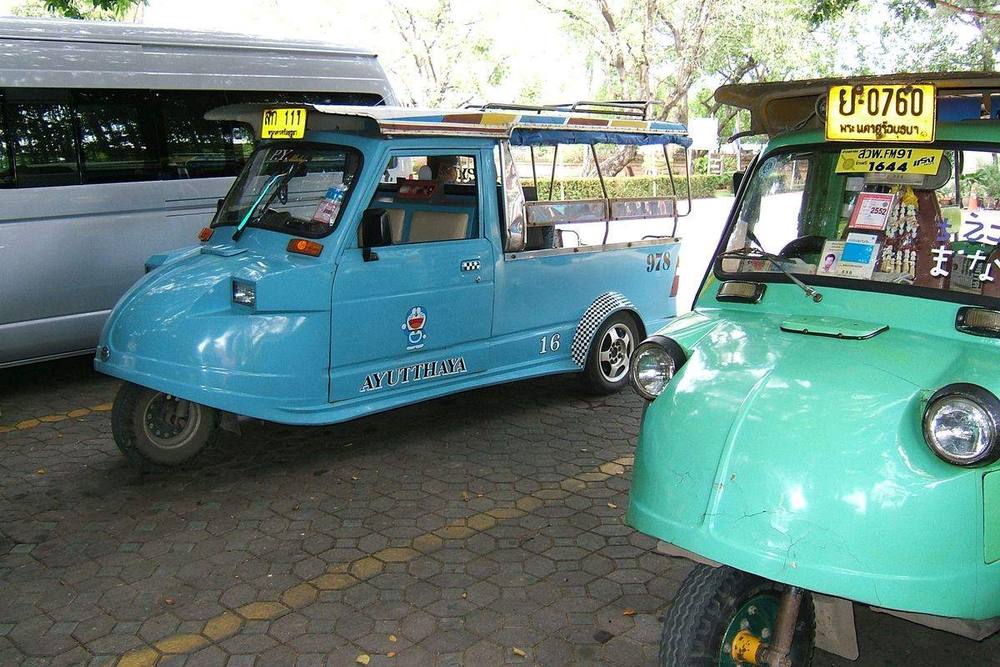
The tuk-tuk tour. A very cheap fixed price for a multi-stop tour. The stops are shops that pay the driver commission, and the tour does not end until you have been in them. The tell: a price so low it cannot cover the petrol.
The scooter damage claim. You return a rented scooter and are shown a scratch that was there when you took it, with the repair quoted at a multiple of its worth, and your passport is being held. The tells and the prevention: never leave a passport as a deposit, photograph and video the whole machine before riding away with the renter present, and use a shop your accommodation recommends and has a relationship with.
The gem shop, and its relatives
The classic Bangkok routine, still running. A friendly, well-dressed stranger near a major temple explains that the site is closed for a ceremony, mentions a government gem promotion ending today, and arranges a tuk-tuk. The shop is calm, professional and convincing. The stones are worth a fraction of what you pay, and the transaction is not reversible from another country.
The tells: the unsolicited approach, the closure story, the time limit, the arranged transport, and the suggestion that you could resell at a profit at home.
The same architecture is used for tailoring deals, timeshare-style presentations and “investment” opportunities. The pattern to recognise is urgency plus an arranged journey plus an unbeatable margin.
Card and ATM routines
Dynamic currency conversion is not a scam in the criminal sense, but it is the largest avoidable cost most visitors meet. When a terminal or machine offers to charge you in your home currency, the operator sets the rate and adds a margin of typically 3–8%. Always choose Thai baht. Full detail in dynamic currency conversion.
Card skimming at standalone machines in tourist streets. Prefer machines attached to a bank branch, cover the keypad, and check the card slot for anything loose.
The terminal taken away. In most places the machine comes to the table. If a card disappears into a back room, watch for it or follow.
The added zero. Check the amount on the terminal screen before you enter a PIN, particularly late at night in bars.
Bars and bills
The bill that grew. Drinks you did not order, a rounding that went one way, a “service” line invented at the end. The prevention: keep the tab visible, pay as you go in venues you do not know, and look at the itemised bill rather than the total.
The venue you were taken to. If somebody on the street guided you to a specific bar, the prices and the bill are their business model. The rule is the same as the gem shop: do not let a stranger choose your destination.
What to do if you are already in it
- Stop paying. Everything gets easier the moment the money stops moving.
- Do not argue in the shop. You will not win an argument on someone else’s premises with their staff around you. Leave.
- Call the tourist police on 1155. They speak English, they exist specifically for this, and their involvement changes the temperature of a dispute quickly.
- If a card was charged, call your issuer that day and ask about a dispute. A same-day report is a very different case from one raised after you fly home.
- Keep the receipt, the business card and photographs. A complaint with a name and an address goes somewhere. One without does not.
- A police report is worth having for anything you will claim on insurance.
When not to bother worrying
A lot of caution advice is wasted effort, and it makes for a worse trip.
- You are not in a tourist district. These routines live where tourists are concentrated. In an ordinary Thai neighbourhood they essentially do not exist.
- You approached them. Nearly every routine above starts with someone approaching you. A shop you walked into, a taxi you flagged, a restaurant you chose is a different risk category.
- The amounts are small. Being charged twenty baht more than a local at a market stall is not a scam worth a confrontation, or a thought.
- You already checked the rate and counted the notes. That is the whole defence for the exchange category. There is nothing further to do.
- You booked through your accommodation. Hotels and guesthouses have ongoing relationships with the operators they recommend, which is exactly the accountability the street lacks.
The underlying pattern across all of it: be careful about anything that finds you, and relaxed about anything you found. That single rule covers most of this page.