Bangkok attractions: when the online ticket is cheaper, and when it is not
Article updated: 2026-09-17
Best rate USD · Bangkok: 33.24 — Superrich Thailand — Headquarter Rajdamri 1 · Sep 20, 08:58 → Details
There is a persistent belief that buying attraction tickets online always saves money. In Bangkok it is true for some places, irrelevant for others, and occasionally the reverse. The difference is not random — it follows directly from who owns the attraction and how it sets its price.
Sorting the sights into two piles makes the whole question easy.
Pile one: fixed-price sights where buying ahead saves nothing
These are state-run, temple-run or foundation-run. They have one price, printed at the window, and they do not run promotions.
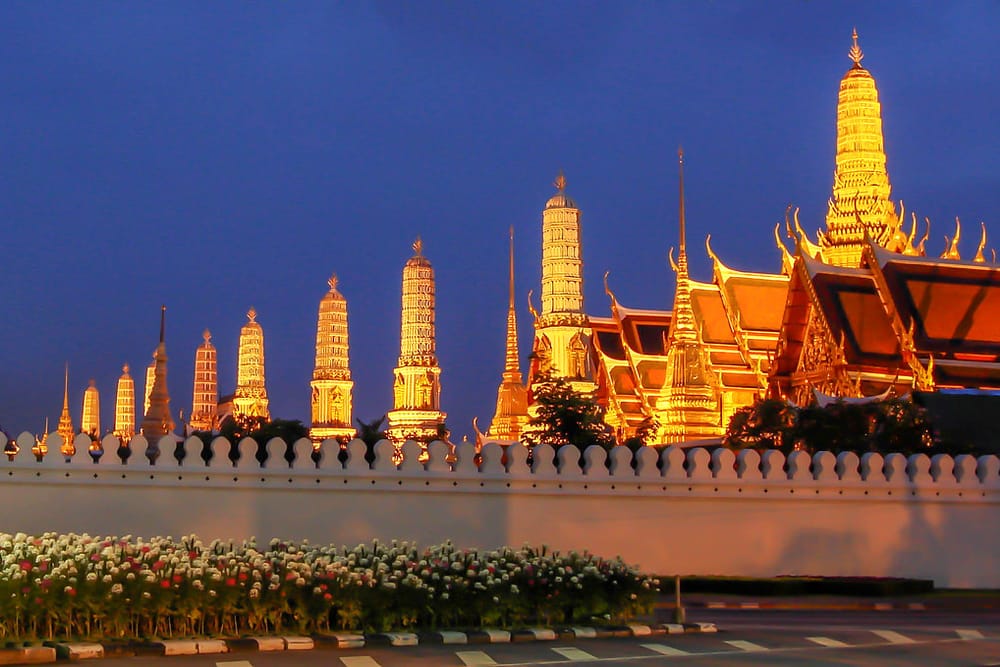
- The Grand Palace and Wat Phra Kaew cost 500 baht per person, at the gate, full stop. Nobody sells that ticket cheaper. What third parties sell is a guided tour that includes the ticket — that is a different product, and whether it is worth it depends on whether you want a guide, not on price.
- Wat Pho and Wat Arun charge a modest entry fee in the low hundreds of baht, collected at the door.
- National museums and most historic sites, including the temples at Ayutthaya, charge a fixed foreigner rate at the gate.
For this pile, an advance ticket buys you convenience at best. The queue at the Grand Palace in the morning is for the ticket window and the security check, so a voucher does not remove it. If someone approaches you outside these places saying they are closed today and offering an alternative tour, that is the oldest scam in the city. They are open.
The one thing worth preparing for the Grand Palace is the dress code — shoulders and knees covered, for everyone. They will rent you a cover-up at the gate, at a price and in a queue you will not enjoy.
Pile two: commercial attractions where the gate price is the highest price
Observation decks, aquariums, wax museums, theme parks, art and illusion museums, dinner cruises and the big outer-city parks all work differently. They publish a high list price at the door and sell the great majority of their tickets through resellers at a discount. The gap is real and often substantial — commonly 20–40% off the walk-up rate.
This includes, among others, the Bangkok observation decks, the aquarium under Siam Paragon, the wax museum, Safari World and Dream World out towards the city edge, and the evening river cruises. If any of those are on your list, buying at the gate is simply paying more for the same seat. Check the price at a ticket resellerAd against the gate price before you buy — the discount varies by attraction and by season, and the whole point of this pile is that you can compare.
Pile three, really: things that sell out rather than get cheaper
A third group sits between the two. Cooking classes, small-group day trips to Ayutthaya or Kanchanaburi, floating-market runs, island boat days, and Muay Thai at the big stadiums are capacity-limited. Advance booking may or may not save money, but it is what gets you a place at all on a Saturday in high season, and it is how you avoid the worst version of each: the tout price at the stadium door, the minibus tour sold in a hotel lobby, the boat that leaves before you arrive.
For these, a place booked aheadAd buys certainty rather than a discount. Read what is included — lunch, entry fees, hotel pickup and whether “join-in” means a minibus of twelve or a coach of forty.
Transport passes: usually no
Bangkok sells several day passes and most visitors should not buy them.
- The BTS one-day pass costs around 150 baht. Single fares run roughly 17–62 baht, so it pays off at about four journeys in one day, and only if all of them are on the BTS. Most people make two or three.
- The Chao Phraya tourist boat day pass costs several times the ordinary orange-flag commuter boat, which costs about 20 baht a trip and stops at nearly all the same piers. The tourist boat has commentary and a different schedule. If you just want to get from Sathorn to Wat Arun, take the orange flag.
- A stored-value card is worth it for a week’s stay simply to skip the ticket machines, but it saves no money on fares.
Multi-attraction passes: the arithmetic
A city pass bundles a set number of attractions for one price. It can be a genuinely good deal and it can be a quiet waste, and which one it is depends on numbers you can work out in five minutes before you buy.
The pass pays off only if all four of these are true:
- The attractions you actually want are on the list. Read the inclusion list first, not the marketing. If your Bangkok is temples, markets and food, most of the list will be attractions you would never have paid for — and a pass full of things you did not want is not a saving.
- You will use the full number of slots. These passes are sold as “any 3 of”, “any 5 of” and so on. If you buy five and use three, compare the price of the three you used at their discounted individual prices. That is the honest comparison, not the gate price of five.
- Your slots go on the expensive attractions. The maths only works when you spend the pass on the 800–1,500-baht items. Using a slot on a 300-baht museum burns value.
- Your itinerary is dense. Realistically this means two or three paid attractions a day, in a city with serious traffic, in heat. Most visitors manage one paid attraction plus wandering. Be honest about your own pace, not your intended pace.
A worked example. Suppose a five-attraction pass costs roughly what four of the big discounted tickets would. If you do five big ones, you are ahead by one. If you do three, you have paid for four and used three, and you would have been better off buying singly. The break-even is usually somewhere around four genuine, high-price visits — check the current price of a multi-attraction passAd and the current individual prices, since both move.
There is also a soft cost: a pass pushes you to visit things because you have paid for them. If that turns a relaxed trip into a schedule, it was not a bargain.
The short decision
- Temples, palaces and museums: buy at the gate, bring cash, cover your shoulders.
- Observation decks, aquariums, theme parks, cruises: buy online, because the gate price is the list price.
- Tours, classes, boats and stadium seats: book ahead for the place, not the price, and read the inclusions.
- Day travel passes: usually no, unless you genuinely plan four-plus rides in one day.
- A multi-attraction pass: only with three or more expensive, wanted attractions per day, on a list you have actually read.
Bring enough cash for the gate-price pile — several sites still take baht only, and there is no ATM inside the Grand Palace walls. Before you head out, it is worth seeing what the counters near you are quoting on the Bangkok page, and if you plan to use a card for the online tickets, decline any offer to be billed in your own currency. The rest of the day’s budget is set out in what a week in Thailand actually costs.