Isan money: Udon Thani, Khon Kaen, Nong Khai, Korat and Ubon
Article updated: 2026-09-17
Best rate USD · Udon Thani: 33.15 — Twelve Victory — Udon Thani (UD Town) · Sep 20, 08:58 → Details
Isan is Thailand’s north-east: twenty provinces, a third of the country’s population, and a very small share of its foreign tourists. People come here for the Mekong towns, the Khmer temples around Buriram and Surin, the national parks, and — a substantial and often overlooked group — because they live here, or are visiting family.
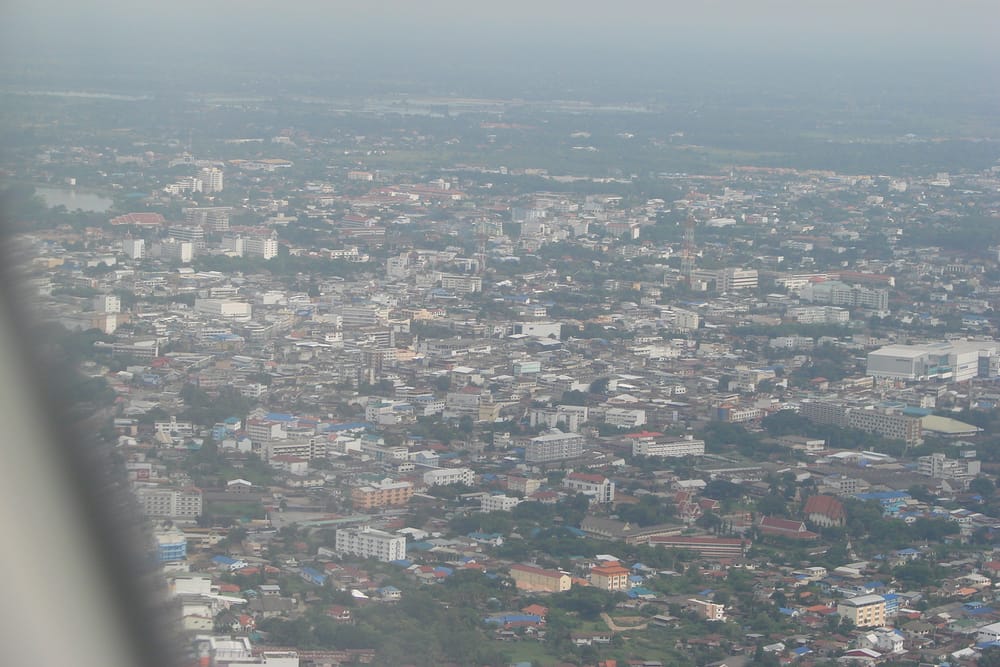
The money situation reflects the visitor numbers. Isan is not badly served so much as thinly served. There are counters, they are fine, and there are simply not many of them.
The towns, one by one
Udon Thani. The largest foreign-facing town in the region, with a long-standing expatriate community and an airport with frequent flights from Bangkok. It has the most usable exchange infrastructure in Isan, and it is the sensible place to sort money out if you are touring the region. Twelve Victory Exchange operates here. Live boards are on the Udon Thani page, and what is published inside the terminal is on the Udon Thani airport page.
Khon Kaen. A university and administrative city at the centre of the region. Counters exist but are oriented to a domestic market. Twelve Victory Exchange is present. Live boards on the Khon Kaen page.
Nong Khai. The Laos crossing to Vientiane, and the town in Isan with the most distinctive money situation. Exchange shops cluster along Meechai Road, Lao kip is genuinely traded here — which is true in only a handful of places in Thailand — and the cross-border traffic supports more counters than the town’s size would suggest. Twelve Victory Exchange and Super Money Chiangmai both appear here. See the Nong Khai page and the border town guide.
Nakhon Ratchasima (Korat). The gateway city, closest to Bangkok and the largest in the region by population. It is a Thai commercial city rather than a tourist one; expect bank branches to be a realistic option alongside the counters. Twelve Victory Exchange operates here. Boards on the Korat page.
Ubon Ratchathani. The far east of the region, with its own airport and a crossing to southern Laos at Chong Mek. Thin coverage; Twelve Victory Exchange is present. See the Ubon page.
Mukdahan and Nakhon Phanom. Two more Mekong crossings into Laos, both quieter than Nong Khai, both with a trade-oriented exchange presence rather than a tourist one. Mukdahan and Nakhon Phanom.
What to expect everywhere in the region
Rates 1–3% behind Bangkok, occasionally more for anything other than dollars and euros. Competition is what makes Bangkok cheap, and there is not much of it here.
Short hours. Provincial counters typically close between 17:00 and 18:00, and Sunday closures are common. Bangkok’s late-evening opening does not apply anywhere in Isan.
Limited currency coverage. US dollars and euros are safe. Pounds are usually fine in Udon Thani. Yen, won, Scandinavian currencies and roubles may not be handled at all outside the largest towns. If you are carrying one of those, change it in Bangkok before you travel — the general picture is in which currency to bring.
Lao kip is a border currency. It is traded at the Mekong crossings and almost nowhere else in Thailand, including in Udon Thani an hour down the road. If you need kip, get it at the border; if you come back with kip, sell it at the border before you leave.
Condition tolerance is lower. Where a counter has fewer buyers for the notes it takes, it is stricter about which notes it takes. Bring large, clean, current-series notes — see banknotes a Thai booth will refuse.
The practical plan
- Change your main amount in Bangkok, before you get on the train or the plane. The Bangkok guide covers where.
- Arrive with enough baht for at least a full day, on the assumption that you land after the counters close.
- Use Udon Thani as the regional hub if you need to change more mid-trip. It has the best coverage in Isan.
- Carry your passport. Licensed changers must record identification, and you need it at any Mekong crossing.
- Keep a card as a backup, and use it properly. Bank ATMs exist in every town listed here. The flat 220-baht fee means one withdrawal of 20,000 baht costs 1.1% while four withdrawals of 5,000 cost 4.4%. Details in Thai ATM fees.
- Carry small notes. Outside the cities, a 1,000-baht note at a noodle stall or for a songthaew fare is a genuine inconvenience for everyone involved.
Getting around
Udon Thani, Khon Kaen and Ubon all have airports with regular Bangkok flightsAd. The overnight train to Nong Khai and Ubon is a well-used route. Buses connect everything, and between towns the local options are songthaews and rented vehicles.
The distances are large. Nong Khai to Ubon is most of a day. That matters for money because it means there is no realistic way to nip back to a better counter — whatever you are carrying when you set off is what you have.
Living here rather than visiting
A significant number of the foreigners in Isan are long-stay residents rather than tourists, and their questions are different. If you are here for months rather than days, the relevant costs are not the exchange spread on a one-off transaction but the recurring ones: international transfers into a Thai account, whether you can open one, and how you pay rent and utilities. Those are separate subjects, and a cash counter is the wrong tool for them.
Who does not need any of this
- Anyone on a short visit staying with family or friends. Your hosts know where the counter is and will take you. Bring dollars or euros and ask.
- Anyone visiting one Isan city for two or three days. Change what you need in Bangkok, bring it with you, and skip the local market entirely.
- Anyone whose spending is on a card. Hotels and larger restaurants in Udon Thani, Khon Kaen and Korat take cards without trouble. Smaller towns are cash, but the amounts are small.
- Anyone changing under the equivalent of a couple of hundred dollars. The provincial penalty on that amount is a few tens of baht. Walk into the nearest licensed counter and stop optimising.
The people this genuinely matters to are those touring the Mekong towns for a week or more with a substantial amount of cash, and those crossing into Laos. For everyone else, the answer is short: change it in Bangkok, bring it with you, and keep a card for emergencies.