Hat Yai and the south: the Malaysian ringgit corridor
Article updated: 2026-09-17
Best rate MYR · Hat Yai: 8.030 — Kin Exchange (Hat Yai, Kim Yong Market) · Sep 20, 08:58 → Details
Hat Yai is the commercial capital of southern Thailand and the busiest land gateway in the country. Most of the visitors are not from Europe or North America. They are Malaysians and Singaporeans on a weekend, coming up through Sadao or Padang Besar for shopping, food and a couple of nights away.
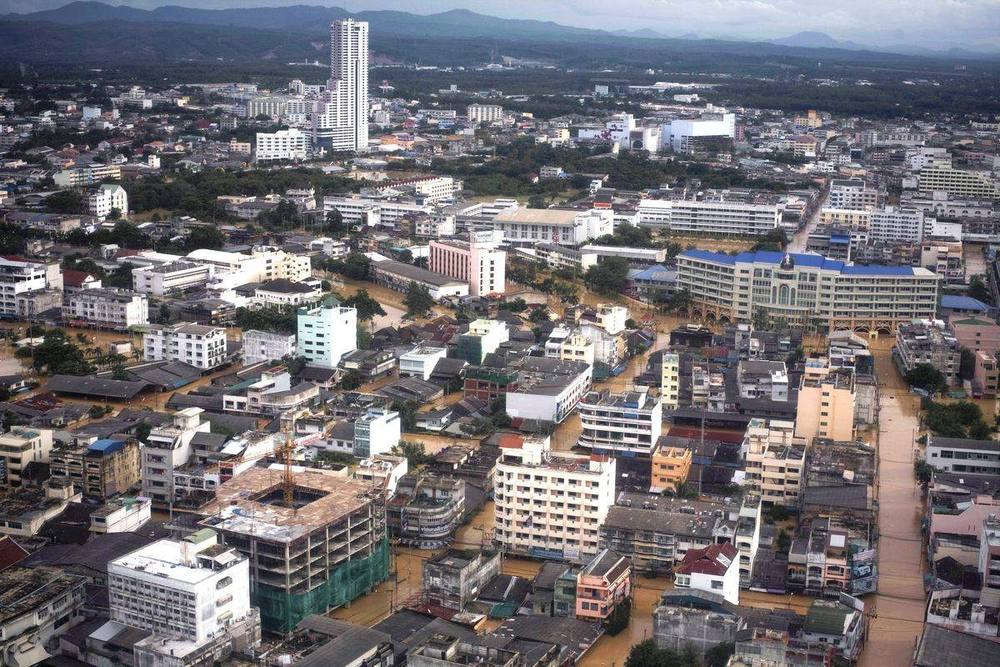
That traffic is what makes the money situation here different from anywhere else in Thailand. The ringgit is not an exotic currency to be quoted grudgingly on the bottom line of a board. It is a working currency with a real two-way market, and in Hat Yai you can often change it on terms that are close to what a major currency gets in Bangkok.
Who is here
Of the tracked chains, K79 Money Exchange operates in Hat Yai. Beyond that, the town has a dense layer of independent counters — around the central shopping streets, near the Lee Garden area, around the markets and near the railway station — plus bank branches and gold shops. Gold shops changing money is a southern Thai habit worth knowing about; they are licensed, they are used to ringgit, and in smaller southern towns they are sometimes the only option.
Live boards and hours for the shops we track are on the Hat Yai page.
The ringgit corridor
Three things follow from the weekend traffic.
MYR spreads are competitive here and poor elsewhere. In Bangkok the ringgit is quoted, but it is a minor line on the board. In Hat Yai it is core business. If you are carrying ringgit, changing it here rather than in Bangkok or Phuket is worth real money.
Both directions work. Because Malaysians arrive with ringgit and leave with baht, and Thais cross the other way, Hat Yai counters hold both. That is unusual — in most of Thailand you can sell a minor currency but not reliably buy it back. If you need ringgit for an onward leg into Malaysia, Hat Yai is where to get it.
Singapore dollars are similarly well covered, for the same reason: a lot of the weekend traffic starts in Singapore.
US dollars and euros are handled normally, at ordinary provincial spreads. The currencies to be careful with are the ones with no local constituency — yen, won, roubles, Scandinavian currencies. Change those before you come south.
Crossing to and from Malaysia
The two main road crossings are Sadao / Bukit Kayu Hitam, which carries the main highway traffic, and Padang Besar, which carries the railway. Trains run between Malaysia and southern Thailand, and the border formalities happen at the station.
If you are crossing, the practical advice is:
- Change on the Thai side for baht, in Hat Yai, where the spread is better than at a border kiosk.
- Do not leave it to the crossing point itself. Border kiosks anywhere charge for their location.
- Carry small baht notes for transport on the Thai side.
- Know that Malaysia has its own rules on currency — check the current limits on what you may carry in and out before travelling with a large amount.
- Keep your passport accessible. You need it at the border and licensed Thai changers must record it anyway — see passport and ID rules.
The rest of the south
Southern Thailand outside Hat Yai has thin exchange coverage.
Songkhla, just down the road, is quieter and has fewer counters. Nakhon Si Thammarat, Trang and Surat Thani are working Thai towns where a bank branch is often the realistic option. Krabi and the Andaman resort areas have tourist-facing counters at tourist-facing rates, with spreads closer to Phuket’s than to Bangkok’s — the reasoning is the same as in the Phuket guide.
Surat Thani deserves a specific mention because it is the mainland gateway to Samui, Phangan and Tao. Anyone heading to the islands should change money on the mainland rather than after the ferry, for reasons set out in the island rate penalty.
Deep south provinces bordering Malaysia — Yala, Pattani, Narathiwat — have an ongoing security situation. Check your own government’s current travel advice before planning around them; that is a safety question rather than a money one.
Hours and habits
Southern counters keep provincial hours, generally closing between 17:00 and 18:00, rather than Bangkok’s late evening. Hat Yai itself is busier than most provincial towns, particularly on Friday and Saturday when the weekend traffic arrives, and some counters extend accordingly. The weekend is also when queues appear.
Rates in Hat Yai are typically 1–3% behind the tightest Bangkok counters on US dollars, which is the standard provincial gap. On ringgit, the comparison runs the other way and Hat Yai wins.
Cash, cards and the 220-baht question
Bank ATMs are everywhere in Hat Yai. The flat 220-baht fee per withdrawal applies to foreign cards as it does across Thailand, so one large withdrawal beats several small ones — 1.1% on 20,000 baht against 4.4% on 5,000. Full arithmetic in Thai ATM fees.
Malaysian and Singaporean cards work normally in Thai machines and terminals. The thing to watch is the same as for everyone else: when a terminal or a machine offers to bill you in ringgit or Singapore dollars rather than baht, decline it. That offer is dynamic currency conversion and it costs 3–8%.
Who does not need this
- Anyone arriving from Malaysia for a weekend with ringgit in their pocket. You are already in the best place in Thailand to change it. Walk to a counter in the town centre, compare two boards, and change what you need. There is no further optimisation available.
- Anyone passing through Hat Yai on the way to the islands. Change enough for transport and a meal, and do the main exchange where you are actually staying — or better, before you get on a boat.
- Anyone spending only on a card. Hotels, malls and larger restaurants in Hat Yai take cards without difficulty.
- Anyone changing a trivial amount. The provincial gap on a hundred dollars is small. Use the nearest licensed counter.
The one group this genuinely helps is travellers moving between Thailand and Malaysia with a meaningful amount of cash in either direction. For them, Hat Yai is not just a convenient place to change money — it is the only town in Thailand where the ringgit market is deep enough to be worth crossing a border with cash at all. Current boards are on the Hat Yai page and the full shop directory.