Tipping and service charges in Thailand: what is expected and what is not
Article updated: 2026-09-17
Best rate USD · Bangkok: 33.24 — Superrich Thailand — Headquarter Rajdamri 1 · Sep 20, 08:58 → Details
Tipping in Thailand confuses visitors because two rules are running at once. There is a formal service charge built into bills at mid-range and above, which is not a tip and is not optional. And there is an informal, modest, entirely discretionary custom of rounding up and leaving small notes, which is not obligatory anywhere.
Neither of them works like the United States. Nobody’s wage depends on your arithmetic, and no one will chase you down the street.
The service charge, and the 17.7% that surprises people
When a Thai hotel, restaurant or spa prints a price followed by ++, two things have not been added yet: service charge at 10% and VAT at 7%.
The part that catches people is that VAT is calculated on top of the service charge rather than alongside it, so the combined effect is about 17.7%, not 17%. A 1,000-baht dinner settles at 1,177.
That 10% service charge is the closest thing Thailand has to a compulsory tip. It appears on the bill, it goes to the establishment, and the practice of how much of it reaches staff varies. What matters for you is:
- If a service charge is on the bill, you have tipped. Nothing further is expected.
- You may still leave the coins from the change if the service was good. Many people do. It is a small gesture, not a top-up percentage.
- You do not add 10% on top of a 10% service charge. That is an American reflex being applied to a bill that has already done the job.
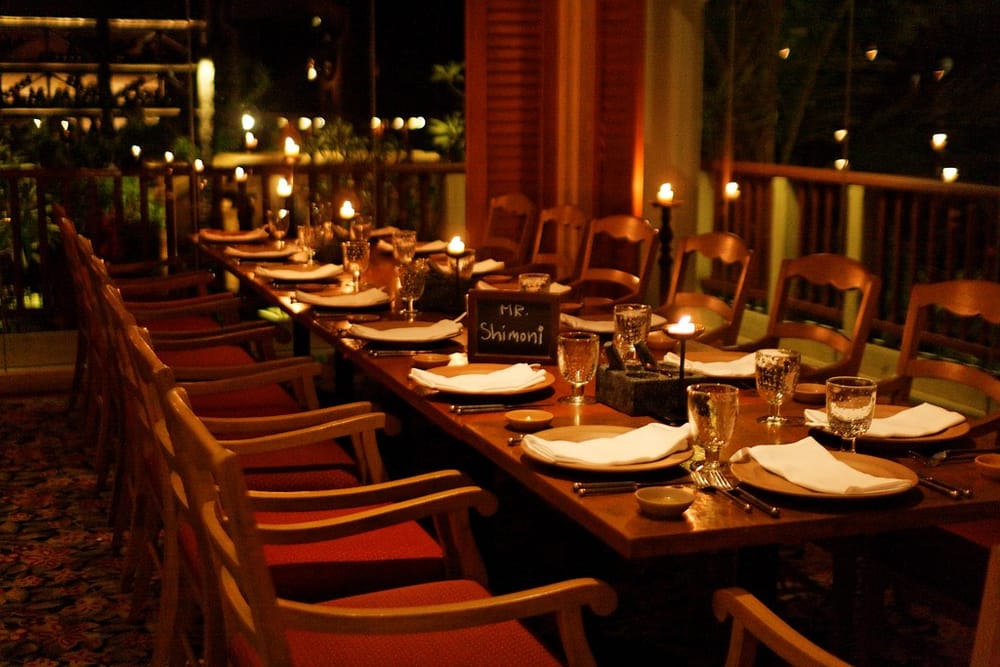
Where you will meet the ++: hotel restaurants, mid-range and upmarket restaurants, hotel spas, and room service. Where you generally will not: street food, shophouse restaurants, food courts, markets and most cafes, which quote one inclusive number. The full accommodation version of this is in booking a hotel in Thailand.
Where a tip is normal
None of these is obligatory. All of them are common, and all of them are small.
Restaurants without a service charge. Rounding up, or leaving the coins and small notes from the change, is the standard gesture. At a local shophouse, leaving nothing is completely unremarkable.
Taxis. Round up to the nearest convenient note. A meter reading a few baht under a round figure is usually settled by not asking for the change. Nobody expects a percentage.
Massage and spa. This is the one place where tipping is genuinely customary rather than merely accepted, and where staff do notice. A small note handed directly to the therapist at the end, separate from the bill, is the normal form. If the spa added a service charge, a smaller gesture is fine.
Hotel staff. A small note for a porter who carries bags, and something left for housekeeping at the end of a stay, are both normal at hotels that have those roles. At a guesthouse where the owner checks you in, it is not.
Tour guides and drivers. On a full-day private tour, a tip at the end is customary and appreciated. On a joined-up group day trip, far less so.
Bars. Leaving the coins is common. Anything more is at your discretion and is not built into anyone’s expectation.
Where tipping is not expected, and can be awkward
Convenience stores, supermarkets and chain coffee shops. No. A tip jar on a counter is an invitation, not an expectation.
Street food stalls and markets. Pay the price, take the change. Refusing change at a food stall is a slightly odd gesture rather than a generous one.
Government offices, hospitals, transport counters, immigration. Never. This is not a grey area. Offering money to an official is a category error at best.
Anywhere the price was negotiated. If you agreed a price for a long-tail boat, a tuk-tuk or a market purchase, the agreed price is the transaction. Adding to it after the fact undoes the negotiation you both just had.
How to tip without the awkwardness
Carry small notes. This is the whole practical problem. A tip is a 20, 50 or 100-baht note, and if all you have is 1,000s, you will find yourself unable to leave anything. Break large notes at convenience stores early in the day. This is the same reason you need small notes for everything else — see where cash is still the only option.
Cash, not card. A service charge can go on the card because it is on the bill. A tip cannot, in practice, in most places. Adding a tip line to a card slip is not a standard Thai practice and often will not reach anyone.
Hand it over, or leave it on the table. For a therapist or a guide, handing it directly with both hands is the natural form. In a restaurant, leaving it with the bill is fine.
Do not make a performance of it. A quiet small note is the register. Large, public tipping reads as strange rather than generous.
What foreign visitors get wrong, by origin
American visitors consistently over-tip and, more importantly, tip on top of the service charge. Fifteen to twenty per cent is not the Thai norm and it distorts the interaction. Round up, leave small notes, stop there.
British and European visitors mostly get the level right and forget that the ++ exists, then argue about the bill. Check the menu for ++ before you order, not after.
Australian and New Zealand visitors often tip nothing anywhere, which is fine in most settings and slightly mean at a spa or after a private day tour.
When not to tip at all
There is no obligation in any of these cases, and no one will think worse of you.
- The bill already carries a 10% service charge. You have tipped. That is the whole point of the line.
- The service was poor. A discretionary tip is discretionary. Leaving nothing is a complete answer.
- You are on a tight budget. Thailand’s tipping culture is genuinely light. Nothing about your trip requires a tipping budget, and a few hundred baht over a week covers a generous version of it.
- The transaction was a negotiated price. You have already settled it.
- You are in a shop, a supermarket or a government office. Not applicable.
The one-line version: assume 17.7% is coming on any bill with ++ printed on it, carry 20s and 50s, leave the coins where it feels right, hand a small note to a massage therapist or a private guide, and stop worrying about it. Thailand is a country where under-tipping is a minor non-event and over-tipping is the more common mistake.