Data for a long stay: travel eSIM or a Thai SIM?
Article updated: 2026-09-21
Best rate USD · Bangkok: 33.24 — Superrich Thailand — Headquarter Rajdamri 1 · Sep 20, 08:58 → Details
For a fortnight’s holiday the data question is nearly trivial: an eSIMAd installed at home, or a tourist SIM at the airport, and either way the difference is the price of a lunch. For a stay of a month or more, the numbers diverge, and the right answer is usually not one product but two, used in sequence.
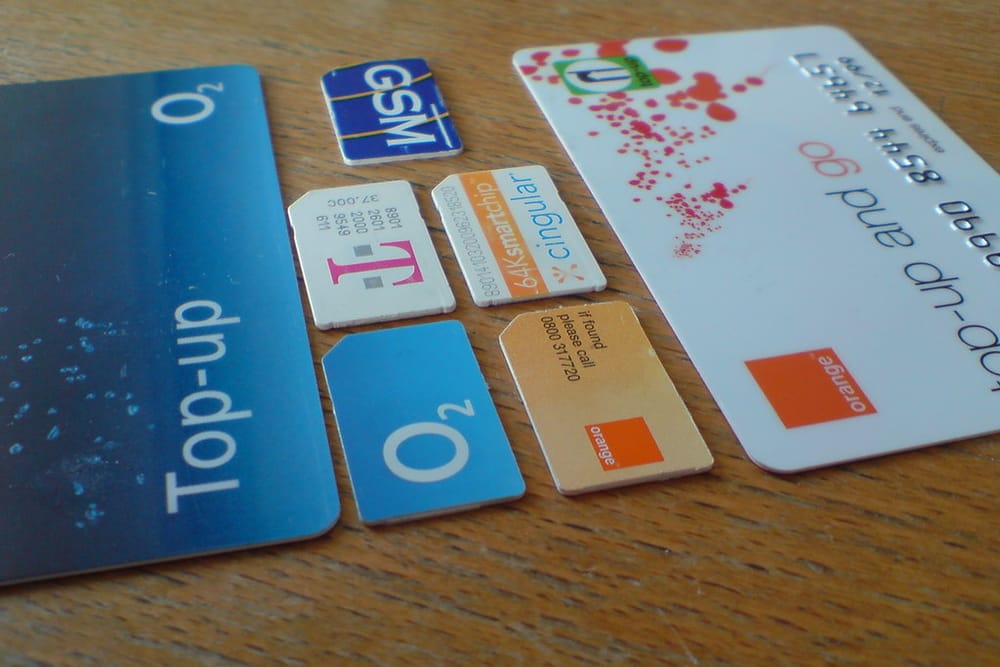
The three products
Tourist SIMs. Sold at the airport and in phone shops by all three Thai networks, priced at roughly 300–600 baht for 8–15 days, with generous or “unlimited” data at a stated speed. Designed for a holiday, and priced for one: excellent value for ten days, and then it expires.
Regular monthly prepaid packages. The plans Thai residents use. A monthly package with tens of GB — often more than a heavy user needs — costs roughly 300–600 baht per month, topped up at any convenience store or through the network’s app. Per gigabyte this is the cheapest data you can buy in the country, by a wide margin.
Travel eSIMs. Bought online before you fly, installed in a few minutes, active the moment the aircraft lands. Roughly US$10–25 for 5–20 GB, valid for a set number of days. The per-gigabyte cost is higher than either Thai product, and that is the price of not having to do anything on arrival.
| Product | Rough cost | Data | Per GB |
|---|---|---|---|
| Tourist SIM | 300–600 baht / 8–15 days | Generous or unlimited | Low |
| Monthly prepaid | 300–600 baht / month | Tens of GB | Lowest |
| Travel eSIM | US$10–25 | 5–20 GB | Highest |
Check the current price for each; plans and allowances change every few months.
What the eSIM is actually buying
Three things, none of which show up in the per-gigabyte comparison.
It works before you have done anything. You land, the phone connects, the map loads, the transfer driver’s message arrives. No queue at the airport counter, no passport photocopy, no fiddling with a tiny tray on a plane.
It keeps your home number alive. On a dual-SIM phone, the eSIM handles data while your home SIM stays in the phone for calls and texts. That matters for one specific reason: bank one-time codes. Most banks still send the login code by text to your home number, and a phone with a Thai SIM in the only slot cannot receive it. For a long stay, being locked out of your bank account in week three is a genuine problem, and the dual-SIM arrangement is the fix.
It is a backup. When the Thai plan runs out at midnight on a Sunday, the eSIM still has a few gigabytes in it.
What the Thai SIM is buying
Cheaper data, and a Thai phone number. The number turns out to matter more than expected on a long stay. Food delivery apps, ride-hailing verification, some hotel and condo Wi-Fi portals, and any Thai bank app you might open all want a local number. A travel eSIM is data only; it cannot receive a Thai text.
Two rules apply. A Thai SIM must be registered with your passport at purchase; the shop photographs the passport and the SIM is linked to you. And tourist plans sometimes restrict hotspot or tethering, which matters if the laptop needs to share the phone’s connection. The regular monthly packages are usually clearer about this; ask before you buy.
Coverage is not the deciding factor. 5G is widely available in the cities and 4G reaches almost everywhere a visitor goes, on all three networks.
The usual answer for a month or more
- Install a travel eSIM at home, sized for the first few days — 5 GB is plenty. It gets you through arrival, the transfer, the hotel and the first morning without thinking.
- Buy a regular monthly prepaid package in the first week, from a network shop in a mall rather than from the airport counter, with your passport. Ask specifically for the monthly plan, not the tourist one; the shop will default to the tourist SIM unless told otherwise.
- Keep the eSIM in the phone as the backup and for the home number’s bank codes.
- Top up monthly at a convenience store or in the app, for roughly the same 300–600 baht.
Over a three-month stay this costs roughly a thousand to two thousand baht in Thai data plus one small eSIM purchase, against a multiple of that for running on travel eSIMs alone. It also gives you the Thai number that half the apps want.
When the eSIM alone is enough
- Stays under three weeks. A tourist SIM or a 20 GB eSIM covers it, and the difference is small.
- Anyone who will not use local apps and works from hotel Wi-Fi. A modest eSIM top-up when it runs out is simpler than a shop visit.
- Anyone whose phone is locked to a home carrier and cannot take a second SIM. Check before you fly; an eSIM is the only option on a locked phone and it may not work either.
For everyone staying a month or more, the two-product plan wins on cost and on not being locked out of your bank. The shorter-stay comparison, including roaming, is in eSIM versus the airport SIM counter versus roaming.