Indian rupees in Thailand: what the counters actually pay, and what to bring instead
Article updated: 2026-09-18
Best rate INR · Bangkok: 0.3300 — Superrich Thailand — Headquarter Rajdamri 1 · Oct 24, 19:45 → Details
Before you exchange:Trip.com ↗Wise ↗KKday ↗
Indian visitors are now one of the largest groups arriving in Thailand, and most of them arrive carrying rupees. The rupee is accepted: on the day this was written, 171 of the 181 money changers this site tracks quoted a rate for it. The question is not whether you can change it. It is what you get — and the answer is worse than for almost any other currency on the board.
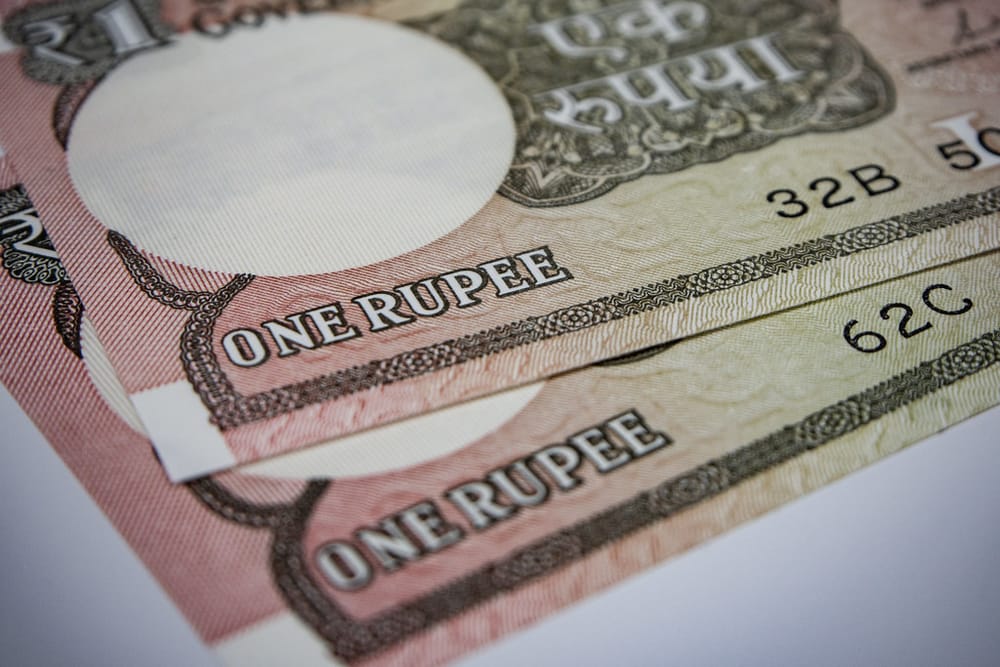
What the board said today
Every figure here is what a shop published on its own website on 18 September 2026, collected the same way the rankings on this site are. Rates move daily, so treat these as the shape of the market, not tomorrow’s number.
The mid-market rate — the one on Google, the one nobody pays — was 0.3469 baht per rupee.
- The best buying rate in Bangkok, at several Superrich, SuperRich 1965 and X-One branches, was 0.335 for ₹500 notes. That is 3.4% under mid-market.
- The two Happy Rich counters on the walkway out of Don Mueang airport paid 0.285. That is 18% under.
- Kin Exchange in Hat Yai paid 0.21. That is 39% under — a ₹10,000 note became 2,100 baht instead of the 3,469 it was worth.
Now the same day for US dollars: the best Bangkok counter paid 33.21 against a mid-market 33.29. That is 0.2% under. A hundred-dollar note lost eight baht to the spread. Ten thousand rupees lost 120 baht at the best counter in the country and 1,370 at the airport.
Why the rupee is treated this way
It is not prejudice; it is plumbing. A Thai money changer has to get rid of the foreign notes it buys. Dollars, euros and yen go back to a bank in Bangkok the same afternoon at a rate close to interbank. Rupees do not: India restricts the export of its own banknotes, so a stack of ₹500 notes in a Bangkok shop is an awkward thing to move on, and the shop prices that awkwardness into what it pays you. The further from Bangkok’s big wholesale counters you are, the fewer buyers the shop has for the notes, and the wider the gap. That is the whole difference between 0.335 in Pratunam and 0.21 in Hat Yai.
Denomination matters too, more than for other currencies. The 0.335 rate is for ₹500 notes only. Smaller notes are quoted lower at every shop, and some will not take ₹100s at all.
The cash plan that works
Bring US dollars, not rupees. Buy them in India before you fly — an authorised dealer or your bank will sell dollars against a ticket and visa — and change the dollars in Thailand. Even after the dealer’s margin at home, a Bangkok counter paying 0.2% under mid-market for $100 notes beats a counter paying 3.4% under for rupees, and it is not close at the airport. Bring $100 and $50 notes; every board in this country pays less for small ones, and some pay a lot less.
Change at the airport only what the first day needs. The Don Mueang and Suvarnabhumi pages show what the counters there publish against the city. On the rupee, the airport gap is the largest on the board.
Use the card where the card works. UPI-linked and RuPay cards are not yet widely usable in Thailand; a Visa or Mastercard is, in hotels, malls and any restaurant with a terminal. Decline “pay in INR” when the machine offers it — that is the dynamic currency conversion trap, and it costs more than the worst counter above.
If you must change rupees, change them in Bangkok, in ₹500s, at a shop on this site’s ranking. The Bangkok page lists what each counter pays today; pick INR in the currency box. Do not change them at the airport, at a hotel, or upcountry unless you have no other way to eat that evening.
What to do with rupees you already carried
Change the minimum in Bangkok at the best published rate and keep the rest for the flight home. Do not carry them to an island or a border town expecting a shop to be kind; the Hat Yai number above is what “kind” looks like there.
When none of this matters
If your trip is a resort, a tour operator’s bus and a card at every stop, the cash you change is a few thousand baht for tips and a market. At that size the difference between the best and worst rupee counter is a coffee. The plan above is for the traveller who is going to change ₹30,000 or more — for them it is the difference between one and three nights’ accommodation.