Which dollar, pound and Australian notes to bring to Thailand
Article updated: 2026-10-15
Best rate USD · Bangkok: 33.65 — Superrich Thailand — Headquarter Rajdamri 1 · Oct 24, 13:59 → Details
Before you exchange:Trip.com ↗Airalo eSIM ↗KKday ↗
Most travellers think about how much cash to bring. Very few think about which notes. Yet it is a decision you make at the bank counter at home in two minutes, and in Thailand it is worth up to a few per cent, more for some currencies than others.
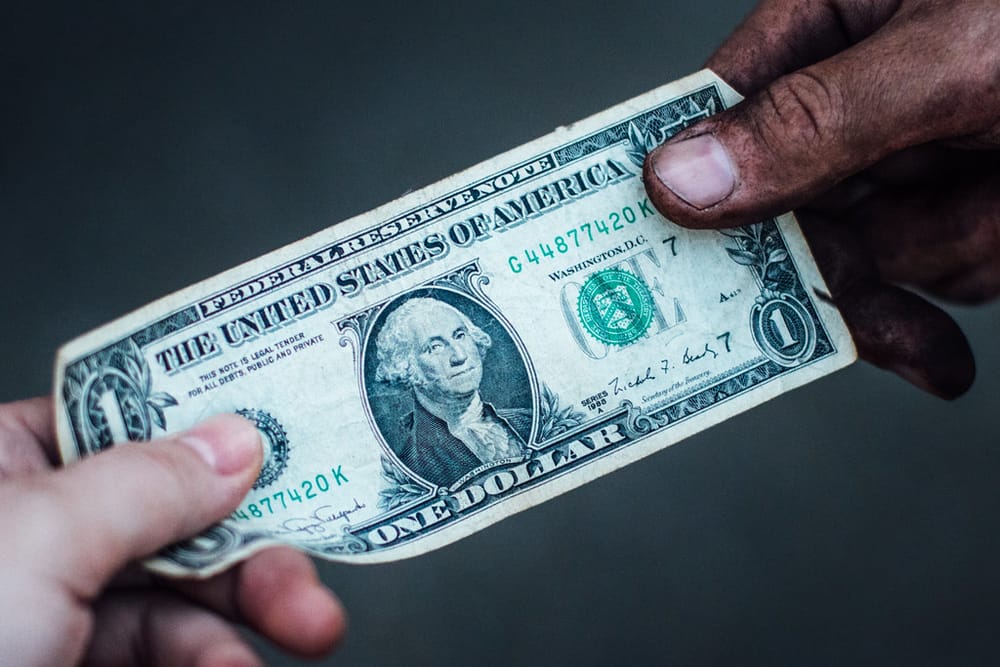
Why large notes earn more
A Thai money changer buys your notes and then has to get rid of them physically, through a bank that counts, checks, bundles and ships them back. That cost falls on each note, not on each dollar.
A US$100 note costs the shop exactly as much to handle as a US$20 note and carries five times the value. So the shop pays you more baht per dollar for the hundred, and it says so on the board, in tiers.
The gap between the top and bottom tier runs from under 1% at the Bangkok head offices to about 3% at a Pattaya branch. On US$2,000 that is up to 60 dollars for having said “in hundreds, please” at your own bank.
It depends on which currency you carry
This is where the three big English-speaking currencies part ways. The tracked boards on 15 October 2026 show the pattern clearly.
US dollars are tiered hard. T.T. Currency Exchange at Terminal 21 Pattaya, the best dollar counter in Pattaya that day, quoted 33.43 baht for US$50 and US$100 notes, 32.95 for US$5 to US$20, and 32.45 for US$1 and US$2: a 2.9% gap between the top and the bottom, and 1.4% less for a twenty than for a hundred. Superrich Thailand’s head office on Rajdamri 1 in Bangkok split it finer and more gently: 33.51 for US$50 and US$100, 33.45 for US$10 and US$20, 33.40 for US$5 and 33.25 for US$1, a gap of 0.8%. Bring hundreds. Fifties are usually paid the same. Anything smaller lands on a lower line of the board, and how much lower depends on the shop.
| Counter, 15 Oct 2026 | US$100 | US$20 | US$1 | Gap |
|---|---|---|---|---|
| Superrich Thailand HQ, Bangkok | 33.51 | 33.45 | 33.25 | 0.8% |
| Twelve Victory, Hua Hin Naresdamri Rd | 33.50 | 33.38 | 33.23 | 0.8% |
| Super Money, Chiang Mai Loi Kroh | 33.48 | 33.23 | 32.88 | 1.8% |
| Mamy Exchange, Phuket Koh Kaew | 33.41 | 33.11 | 32.61 | 2.4% |
| T.T. Currency Exchange, Terminal 21 Pattaya | 33.43 | 32.95 | 32.45 | 2.9% |
Pounds are barely tiered. The same Bangkok head office paid 44.40 for £50 notes and 44.35 for £5 to £20, a tenth of a per cent. Twelve Victory in Hua Hin quoted the same pair. In Pattaya, Superrich Thailand at Central Pattaya paid 44.20 for every pound note it accepted, and the T.T. branches 44.05 flat. Bring £50s and £20s because they are easier to count and carry, not because the rate will punish you otherwise.
Australian dollars get a single rate. Across the tracked shops the Australian dollar is quoted on one line, with no denomination tiers at all. A$100s and A$50s are still the sensible choice for the same practical reasons, but the board does not care.
Those are one day’s numbers, and tiers vary by shop; the live boards on the Bangkok page show what each counter is quoting today, line by line. The general shape, dollars tiered, pounds nearly flat, Australian dollars flat, is what to plan around.
Euros, yen and the currencies that are tiered hardest
Euros sit between dollars and pounds: the Bangkok head office paid 37.50 for 100- and 500-euro notes and 37.45 for 5 to 50, a gap of 0.13%, while the T.T. branches in Pattaya quoted a single 37.15 for every note. Yen were flat at the head office, 0.2115 from 1,000 to 10,000 yen.
The steep tiers are on the Asian currencies. For Chinese yuan the same head office paid 5.02 for 50s and 100s, 4.94 for 10s and 20s and 4.64 for anything smaller, a 7.6% gap. For Korean won a Pattaya branch paid 0.0250 for 5,000- to 50,000-won notes and 0.0180 for 1,000-won notes, 28% less. Bring the largest notes that exist.
The recommendation, currency by currency
US dollars: mostly $100s, some $50s. Only notes from recent series; older designs, roughly those printed before 2006, are often refused outright in South-East Asia regardless of condition. Leave the $1s, $5s, $10s and $20s at home; they go into a lower tier and buy nothing in Thailand that you could not get another way.
Pounds sterling: £50s and £20s, Bank of England issue. Scottish and Northern Irish notes are a different story: not every counter takes them, and those that do quote them on a separate, lower line. The details are in Scottish and Northern Irish notes.
Australian dollars: A$100s and A$50s. Fewer notes to count at the counter, fewer to carry, and no rate penalty either way.
Whichever currency you carry, add a few mid-sized notes for a small top-up late in the day.
Condition matters as much as denomination
A torn $100 earns you less than a clean $50, because it may not be accepted at all. Counters inspect carefully: they carry the risk when their own bank rejects a note.
Check for:
- no tears, including small ones at the edge
- no tape, no repairs
- no writing, stamps or discolouration
- no water damage and no hard creases
Carry the notes flat in an envelope in your hand luggage, not folded in a pocket. Banknotes a Thai booth will refuse goes through what gets turned away and what gets discounted.
Is it worth switching to US dollars first?
Older guidebook advice says to carry US dollars whatever your home currency, because the dollar “goes further” in Asia. For Thailand that is no longer true. On 15 October the best Bangkok pound rate, 44.40, sat 0.2% below the mid-market rate, the same distance as the best dollar rate. Converting at home and again in Thailand means paying two margins instead of one; US dollars only make sense if you already hold them. Bring your own currency or US dollars? has the comparison.
How much cash in total
As a guide: two people for two weeks, mid-range hotels, restaurant meals, excursions and transport, 30,000 to 50,000 baht in cash is a realistic range, with hotels and larger restaurants paid by card. Do not bring the entire trip budget in notes; cash can be stolen, a card can be cancelled. The arithmetic between the two routes is in cash, card or ATM.
At the counter in Thailand
Lay your notes out sorted, largest first. State the amount, ask to see the baht total on the display or the receipt, and count the money before you leave the window. You will need your passport in every case; licensed counters must record ID for each transaction, as explained in passport and ID rules.
When you do not need this
- You are paying mostly by card and bringing a few hundred dollars. The tier gap on that amount is a few dollars. Bring what you have.
- You carry Australian dollars. The board quotes one rate; bring whatever notes are clean.
- You are getting cash from an ATM. Then the 220-baht fee per withdrawal is your problem, not the denomination.
Which counters are quoting the best rates today is on the Bangkok page, the Pattaya page and the other city pages; the full list is in the shop directory.