Travel insurance for Thailand: what it actually has to cover
Article updated: 2026-09-21
Best rate USD · Bangkok: 33.24 — Superrich Thailand — Headquarter Rajdamri 1 · Sep 20, 08:58 → Details
Most people buy travel insuranceAd the way they buy a padlock: quickly, at the last minute, without reading what it opens. For Thailand that is a mistake, because the policy will be tested against a specific set of bills, and those bills are known. Working back from them tells you what the cover has to do and which cheap policies fail.
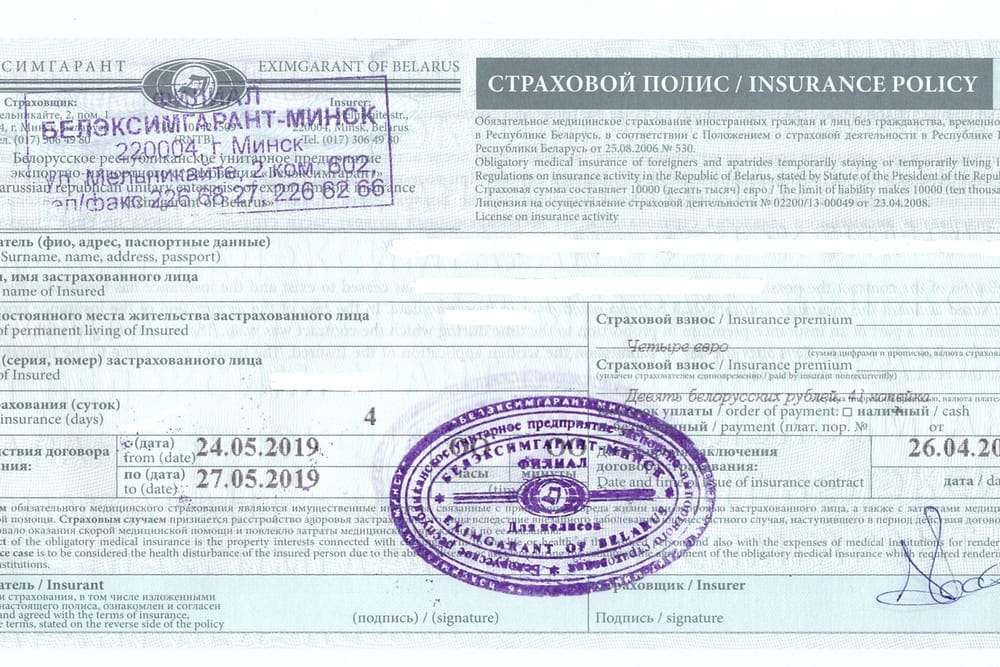
What a Thai hospital actually charges
Foreign visitors in Bangkok almost always end up in a private hospital, partly because that is where the English-speaking staff are and partly because that is where a taxi driver takes you. The prices there are not Thai prices.
- A simple outpatient visit — a consultation, a prescription, perhaps a blood test — runs roughly 3,000–8,000 baht.
- An emergency visit with scans and a few hours of observation runs into the tens of thousands of baht.
- Intensive care costs roughly 50,000–150,000 baht per night.
A week in intensive care after a bad accident is therefore a bill approaching a million baht before any surgery or air transport is counted. That is the figure a policy has to be sized against, not the price of a doctor’s visit for food poisoning. Most advisers put the medical limit at a few million baht, and the round number commonly quoted is the equivalent of US$100,000. Anything below that is a policy for minor illness, not for the claim that actually ruins trips.
The claim that ruins trips
The most common serious claim from Thailand is a motorbike accident. Not a mugging, not dengue, not a boat: a rented scooter on a wet road.
This matters because of an exclusion buried in nearly every policy. Riding a motorbike is only covered if you hold a valid motorcycle licence, which for most visitors means an international driving permit endorsed for motorcycles, backed by a home licence that includes them. A car licence does not count. Rent a scooter on a car licence, come off it, and the insurer can decline the whole claim — the ambulance, the scans, the ward, the flight home.
The second exclusion is intoxication. Anything that happens while you are drunk is outside the policy, and the hospital’s blood test goes in the file.
Evacuation is the expensive part
Medical cover pays the hospital. Medical evacuation and repatriation pay to move you: an air ambulance to Bangkok from an island, a stretcher and a nurse on a commercial flight home, or the return of a body. This is the part that makes a decent policy cost more than a cheap one, and it is the part that bankrupts families without it, because a medical flight to Europe or North America can cost more than the hospital stay it follows.
Check the evacuation limit separately from the medical limit; on a cheap policy it is usually what has been thinned out.
Two ways a claim gets paid
Pay first, claim later. You settle the hospital bill yourself — the hospital will want payment or a card guarantee before discharge — and claim it back at home. Keep every receipt, every itemised invoice and the doctor’s written report. Without the paperwork the claim is an argument.
Direct billing. The insurer’s assistance line confirms cover and pays the hospital directly, so you never handle the money. Only some insurers offer this and only with hospitals they have an arrangement with, which in practice means the larger private hospitals in Bangkok, Phuket, Pattaya and Chiang Mai. It is worth knowing before you need it whether your policy works this way, and which hospitals are on its list.
In both models, call the insurer’s assistance line as early as you can. Many policies require notification before non-emergency treatment and will argue about anything they were not told about.
Theft
Theft claims need a police report, and insurers want it filed quickly — within 24 hours is the usual expectation. Tourist police posts in the main resort areas can take the report in English. Without it the claim is a story; with it, a document.
Flight delays are not insurance
A common assumption is that a long delay or cancellation is an insurance matter. It mostly is not. Travel insurance may pay a small fixed sum for a delay over a set number of hours, or reimburse a hotel; the real money is a separate legal right, and it depends on the flight, not on the policy.
Under EU regulation 261, a delayed or cancelled flight can owe you €250–600 per passenger — but only if the flight departed an EU airport, or was operated by an EU airline flying into the EU. The consequences for Thailand are specific:
| Flight | Covered by EU261? |
|---|---|
| Thai or Asian carrier, Bangkok to Europe | No |
| European carrier, Bangkok to Europe | Yes |
| Any carrier, Europe to Bangkok | Yes |
| Bangkok to Singapore, Tokyo, Sydney | No |
So a Thai-operated flight home from Bangkok, delayed by eight hours, produces no compensation under the regulation, however unpleasant the night was. A European airline on the same route does. Airlines do not volunteer this money. Claim services will chase it for you and take a cut of roughly 25–35% of whatever they recover, which is worth it if you have no patience for an airline’s complaints process.
The short version
- Medical limit of at least a few million baht; US$100,000 is the common benchmark.
- Evacuation and repatriation cover, checked as a separate figure.
- Motorcycle licence in order, or do not ride.
- Sober when it matters.
- Receipts, reports, and a police report within 24 hours for theft.
- Delay compensation is a legal claim against the airline, and only for the routes the law covers.
The hospital bills themselves are covered in more detail in Thai hospital bills for foreigners.